
UKCP Psychotherapist · Therapeutic Coach
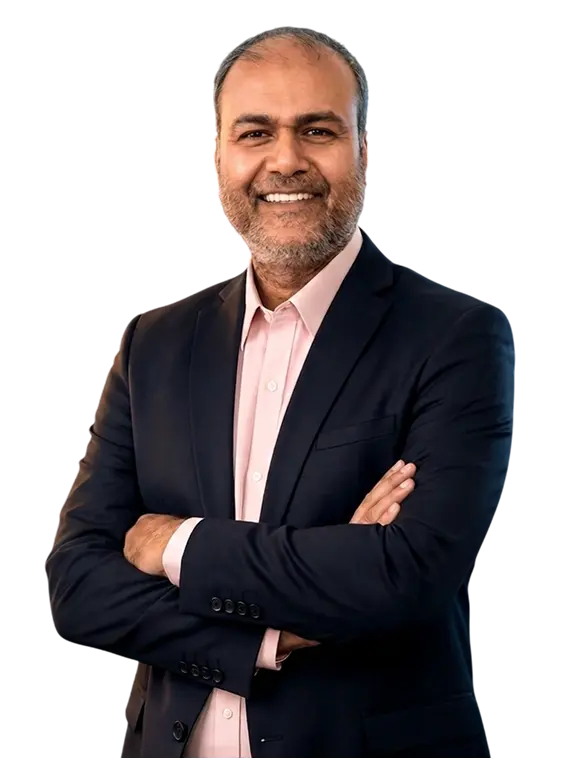
Intrusive thoughts, checking, contamination fears, Pure O. I’m Sabbir Ahmed, a UKCP-registered psychotherapist. We work with exposure and response prevention, the therapy NICE recommends first for OCD, at a pace you set.
Years of experience




OCD is not a tidiness quirk. It is a loop: an intrusive thought that spikes anxiety, a compulsion that soothes it for a moment, and a pull to do it again. Most people who come to me describe some version of this.
“I’ve checked the door four times and I still don’t trust the memory of doing it.”
“A thought lands that horrifies me, and I lose hours trying to prove I’d never act on it.”
“Washing that started off sensible now follows rules only I know, and the rules keep growing.”
“I know it doesn’t make sense. That’s the cruel part. Knowing doesn’t switch it off.”
Therapy here starts from the view that these are differences, not defects. The work is not about making you look less autistic. It is about a life that costs you less to live.
Client examples are anonymised or composite.
OCD responds to a specific, trained approach. Who delivers it, and whether they are accountable, changes the outcome.
| What matters | OCD therapy with me | Generic or unregulated support |
|---|---|---|
| Who you see | One named UKCP-registered psychotherapist, start to finish. | A rotating pool, an app, or an unregulated "coach." |
| ERP and CBT training | CBT trained at King's College London; ERP is core to the work. | Often no specific OCD or ERP training. |
| Accountability | Bound by the UKCP code of ethics and complaints process. | May answer to no professional body. |
| Reassurance | I help you gently drop the reassurance and rituals that feed OCD. | Well-meant reassurance can quietly strengthen the loop. |
| Honest about fit | I will tell you if the NHS or another route would serve you better. | One-size programme, sold either way. |
OCD has two halves, obsessions and compulsions, and they lock together into a cycle. Here is what that looks like, and where it comes from.
Unwanted thoughts that spike anxiety: contamination, harm, symmetry, or taboo themes. Having them does not mean you want them (NIMH).
Repeated actions or mental acts done to ease the anxiety. They calm things briefly, then feed the cycle over the long run (NIMH, 2011).
When compulsions are internal, silent reviewing, neutralising, mental checking, it can look like “pure” obsession. It is still OCD, and still treatable.
OCD runs on a specific obsession-and-compulsion loop; generalised anxiety tends to be broader worry. Part of the first session is working out which you are dealing with.
No single cause. Biology, genetics, cognition and environment all play a part; serotonin and activity in the basal ganglia and OFC are implicated (Goodman et al., 2004), and OCD runs in families (APA, 2013).
OCD is often misread as a personality quirk about neatness. It is far more serious than that. The work starts from empathy and evidence, not labels.
NICE recommends CBT, including exposure and response prevention (ERP), as the first-line psychological treatment for OCD. In plain terms, we face the fear gradually while resisting the compulsion, so your brain learns the anxiety settles on its own.
For the practical side, my guide on how OCD therapy works in London covers access routes, waiting times and costs. The full guideline is published by NICE.
We map the specific obsessions, the compulsions they drive, and what keeps the cycle turning for you.
Together we rank feared situations from mild to hard. You are never pushed past what you have agreed to
You face triggers step by step while resisting the compulsion, and the anxiety falls without the ritual (Foa et al., 2005).
Relapse-proofing, self-help tools you keep using, and a plan for the setbacks that are a normal part of recovery.
CBT with ERP is the treatment with the strongest evidence base for OCD, and it helps most people who stick with it. It also asks something of you, and some people find the exposure work hard to keep up, which is exactly why pace and a skilled therapist matter. I will be straight with you about what to expect.
Send a couple of lines about what is going on. I reply personally, and we start with a free 20-minute initial consultation to see whether this fits.
Clear fees for OCD therapy, with a free 20-minute initial consultation.
From
£195
Studied CBT at King's College London

I have spent over 20 years in NHS, private and community settings, with training from the Tavistock and Portman NHS Foundation Trust and CBT training at King’s College London. I know how exhausting OCD is: the checking that never quite settles, the thoughts you would never choose.
My work is calm, structured and honest. We use exposure and response prevention at a pace you set, and I will always tell you if another route would serve you better. One clinician, start to finish, not a programme.
Questions people ask before getting in touch
Cognitive behavioural therapy including exposure and response prevention (ERP) is the first-line psychological treatment NICE recommends for OCD. ERP works by facing feared thoughts and situations gradually while resisting the compulsion, so the anxiety learns to settle without the ritual. For some people an SSRI alongside therapy helps too, which I would coordinate with your GP.
No. ERP is always collaborative and gradual. We build a ladder of feared situations together, from mild to hard, and you decide each step. Nothing happens without your agreement. The point is not to overwhelm you, it is to show your nervous system, at a manageable pace, that the feared outcome does not need the compulsion to pass.
Many people notice change within 12 to 20 sessions, though longer-standing or more complex OCD can take longer. I review progress every few sessions so the work keeps a clear shape rather than drifting open-ended, and the pace is always yours to set.
Yes. So-called Pure O is OCD where the compulsions are mental rather than visible: silent reviewing, neutralising, reassurance-seeking. It responds to the same ERP-based approach, adapted to work with internal rituals. Distressing intrusive thoughts, including taboo ones, are a recognised feature of OCD and do not reflect who you are.
For most people, yes. ERP translates well to video, and working in your own home can make some exposures more relevant to daily life. I see clients in person at Harley Street and Angel, and online across the UK, with the same clinician either way. We decide together which suits your OCD and your circumstances.
No. I work privately rather than through insurance panels. You pay directly for each session or block, which keeps the work confidential and free of diagnosis-led restrictions. Full details are on the therapy fees page.
My practice is planned support, not an emergency service. If you are in crisis right now, call the Samaritans free, 24/7, on 116 123, or call 999 in an emergency. Once you are safe and stable, I am here for medium and longer-term OCD therapy.
In person at 96 Harley Street, in London’s established medical district, a few minutes from Oxford Circus, Bond Street and Regent’s Park, or at 335 City Road in Angel, a short walk from Angel station. Or online, wherever you are in the UK, with the same clinician either way.
Harley Street: 96 Harley Street, London W1G 7HY
London City Road: 335 City Rd, London EC1V 1LJ (Angel)
Online: Secure video sessions UK-wide and globally

Book your initial consultation today and take the first step towards clarity, confidence and lasting change.
We treat your enquiry with clinical confidentiality under UKCP ethical standards. Details you provide are held securely and never shared with third parties. Read our Privacy Policy.