
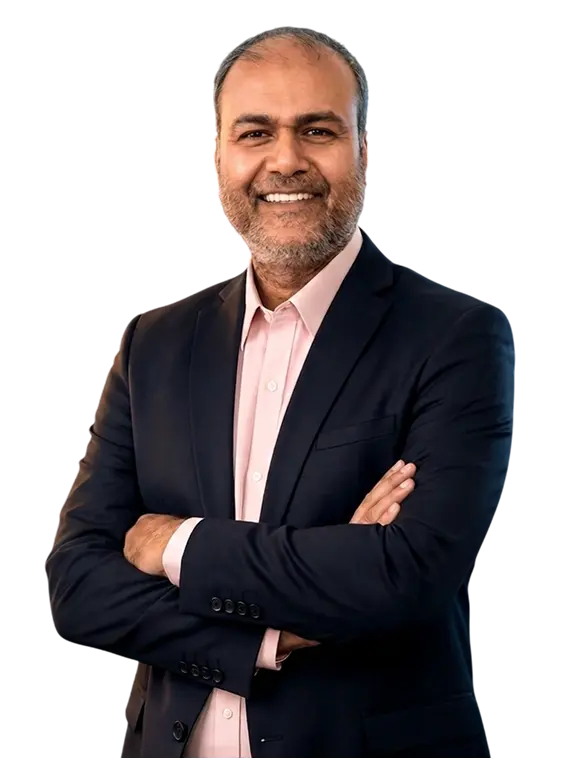
UKCP Psychotherapist · Therapeutic Coach
When cutting back has not stuck, we look at what you use or do, and at the stress, low mood or trauma that so often sits underneath.
Years of experience




Maybe it began as the thing that took the edge off. A drink to come down from the day. A bet, a scroll, a line, a hit that made everything quieter for a while. Somewhere along the way it stopped being a choice and started running the show.
From the outside you might still be holding it together: the job, the family, the group chat. Inside there is a private arithmetic, how much, how often, how to hide the gap between the two. The promises to cut down get quieter each time they break.
You are not weak, and you are not the only one. Addiction is a recognised health condition, not a character flaw, and it responds to the right kind of help.
Client examples on this page are anonymised or composite.
Apps, peer groups and unregulated coaches all have their place. Here is what one-to-one therapy with a UKCP-registered psychotherapist adds on top.
| This therapy | Generic or unregulated support | |
|---|---|---|
| Who you see | One UKCP-registered psychotherapist, the same person throughout. | Rotating volunteers, bots or unregulated helpers. |
| Regulation | Accountable to the UKCP register and complaints process (Reg. No. 2011164676). | Often no register and no oversight. |
| What we do | Skills for the cravings and the reasons underneath, together. | Willpower tips, or one fixed programme for everyone. |
| The whole picture | Addiction understood alongside anxiety, trauma and low mood. | The behaviour treated on its own. |
| Privacy | Private and self-funded, with no diagnosis on an insurer's file. | Varies, and anonymity is not always protected. |
| Continuity | The same clinician as your needs change. | A fresh start with each new contact. |
Substance and behavioural addiction, and the ways they overlap. If yours is not on this list, it is still worth asking.
From daily drinking you cannot seem to pause, to full physical dependence. We work on the cravings, the triggers and the reasons the drink earned its place.
Opioids, stimulants, cocaine, cannabis, benzodiazepines and Z-drugs, whether from the street or a prescription that quietly got out of hand.
The habit that keeps cigarettes, vapes and tobacco threaded through the day, and the anxiety that often sits behind reaching for the next one.
Gambling, gaming and internet use, pornography, compulsive spending or eating. Behaviours that light up the same reward pathways as any substance.
When a substance and a behaviour travel together, for example drinking alongside gambling, so recovery has to hold both at once.
More than one substance in the mix, such as alcohol with benzodiazepines or opioids. Complex patterns that need an approach built for them.
There is no single fix for addiction, and I will not pretend otherwise. The work combines practical skills with a careful look at the reasons underneath, at a pace you set.
First we take some pressure off the day. DBT-informed skills for cravings, urges and the emotions that trigger them, so you get a bit of room to think.
Then we look at what the addiction has been doing for you: the anxiety, low mood or trauma it has been managing. This is the underlying-cause work the quick fixes skip.
We use approaches like CBT and motivational interviewing to change the patterns, strengthen your own reasons to change, and plan for the moments that risk a slip.
Where it helps, we bring in the impact on family and relationships, and coordinate with your GP or a medical team if detox or medication is part of your picture.
I provide talking therapy, not detox, rehab or medication. Where those are needed I will help you find them and work alongside them.
Early recognition matters. None of this is a diagnosis, but it can help you make sense of what you are noticing.
For a fuller overview of causes, stages and medical options, see the addiction guide.
Biological. Genetics, and the brain’s dopamine reward system adapting to the substance or behaviour.
Psychological. Anxiety, depression and trauma, which so often sit alongside addiction.
Social. Environment, stress and what is around you day to day. It is rarely one cause, usually several at once.
1
Early use that still feels manageable
2
Rising tolerance and more regular use
3
Dependence, where stopping feels out of reach
4
Recognising the pattern, which is where recovery starts
Practical changes we can work towards, without promises or fixed timelines.
Learn to notice cravings and triggers earlier, so there is more choice between an urge and an action.
Build practical ways to manage distress without relying on the substance or behaviour that has been causing harm.
Work on the daily patterns, conversations and boundaries that support recovery and reduce avoidable pressure.
Identify warning signs, support options and next steps for setbacks, without treating one difficult moment as failure.
No packages to decode and no insurance panels. The first step is always a free call.
Starting from
£195
Sabbir is not dogmatic and I think he goes beyond how he was taught to be a therapist. Sabbir and I have quite different backgrounds and yet I find it easy to relate to him.
Also, I feel he is very supportive of the direction I’m going and interested in.
Sabbir has been incredibly accommodating with me and I’m very grateful to him for that.
Delighted to be working with you Sabbir!
App developer and founder
Sabbir's professionalism and expertise have been instrumental in navigating various aspects of my life. What sets Sabbir apart is his commitment to empowering his clients. He provides practical tools and strategies that extended beyond our sessions, contributing significantly to my personal growth and resilience in everyday life.
Legal professional
With Sabbir’s continued support and guidance, I am better at dealing with negative thoughts and emotions, have improved the quality of the most important relationships in my life, and have finally clarified and made progress towards my personal and professional goals. If you are someone serious about improving your mental health and wellbeing, I highly recommend working with Sabbir.
Author and entrepreneur
Studied CBT at King's College London

I am a UKCP-registered psychotherapist with over 20 years’ experience across the NHS, private and community settings. I trained at the Tavistock and Portman NHS Foundation Trust and studied CBT at King’s College London.
I work with addiction the way I would want someone to work with a person I love: without judgement, without a script, and without pretending the hard part is not hard. You get one named clinician for the whole of the work, in person on Harley Street or in Angel, or online across the UK.
Questions about addiction therapy.
Yes. Addiction is a recognised, treatable health condition, not a lack of willpower. Consistent one-to-one work helps many people cut down, stop and stay stopped by addressing both the cravings and the reasons underneath. I cannot promise a specific outcome, and anyone who does should give you pause.
No. Many people come while they are still using and still unsure. Building motivation is part of the therapy, so we can begin from ambivalence. You do not need to have it worked out before you get in touch
No. I provide talking therapy. Detox, inpatient rehab and medication-assisted treatment are medical services, and where you need them I will help you find them and work alongside your GP or medical team rather than replace them.
Yes, it is confidential within the usual professional and safeguarding limits, which I explain at the start. Because the work is private and self-funded, there is no insurer file or diagnosis-led record attached to it.
No. I work privately rather than through insurance panels. You pay directly for each session or block, which keeps the work confidential and free of diagnosis-led restrictions.
Yes. Gambling, gaming, internet use, pornography and compulsive spending draw on the same reward pathways as substances, and they respond to the same combination of practical skills and underlying-cause work.
My practice is planned support, not an emergency service. If you are in crisis right now, call Samaritans free, 24/7, on 116 123, or call 999 in an emergency. Once you are safe, I am here for the longer-term work.
In person at 96 Harley Street, in London’s established medical district, a few minutes from Oxford Circus, Bond Street and Regent’s Park, or at 335 City Road in Angel, a short walk from Angel station. Or online, wherever you are in the UK, with the same clinician either way.
Harley Street: 96 Harley Street, London W1G 7HY
London City Road: 335 City Rd, London EC1V 1LJ (Angel)
Online: Secure video sessions UK-wide and globally

Book your initial consultation today and take the first step towards clarity, confidence and lasting change.
We treat your enquiry with clinical confidentiality under UKCP ethical standards. Details you provide are held securely and never shared with third parties. Read our Privacy Policy.