
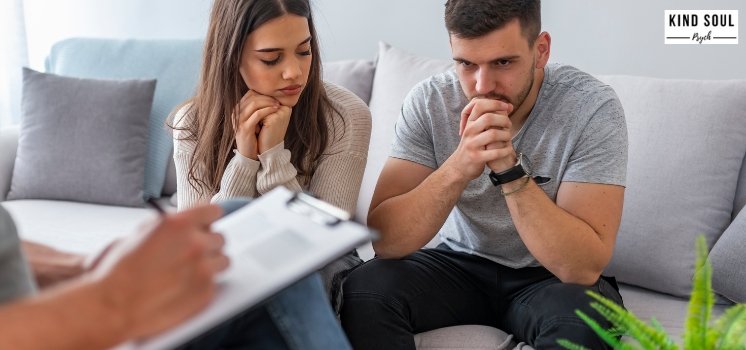
The process of healing starts by taking baby steps, even if it is just for individuals. It is the start of the huge strength, openness and positivity that the couple must plant in order to get back together. Couples counselling London has become an increasingly sought-after resource for partners. Who recognize that their relationship needs professional support to navigate challenges. Improve communication, and rebuild connection. It does not matter if you have continuous disputes or you are emotionally far away from your partner. In such cases, the therapist and the client together experience a mixture of emotions like thrill and horror. This is very true when the very first consultation happens: the participants are in doubt about what it is going to be like.
In my practice, I acknowledge that emotions such as anxiety, hope, uncertainty, and probably even relief that you are finally taking action, coming together in a single first session, are a mixture of feelings among the partners. The majority of the couples arrive worried about sharing their problems in front of a stranger or fearful of being judged for their relationship difficulties. Some of the partners are of differing opinions about what therapy to be like while others are thinking that their relationship might be too late to save. Just like an online life coach assists a person in overcoming personal challenges with the help of order and support, couples therapy gives a chance to the partners to handle their problems in a secure, neutral place where two sides are allowed to speak and their words are valued equally.
How to Prepare for Your First Couples Counselling London Session?
Getting ready for your first couples counselling session in London does not require a lot of difficult tasks but rather some thinking which can help you have a better experience together with us. I want both partners to reflect on what exactly is bothering them or what are the main reasons for the therapy, what they are expecting to get from it and how the relationship would look after it has been successfully resolved. Having different answers to these questions is not a problem at all, actually, it is the differences that will probably come to be the focus of our therapeutic work.
Prior to the session, I highly recommend having a very short discussion with your spouse about how you both are committed to the process. Couples therapy will bear fruits only when both partners agree to look at their own roles in the relationship dynamic and not just blame each other or wait for the other to change. Think about what you are personally ready to give up and how accepting you are of getting difficult criticism. Just like an online life coach would ask his/her clients to define their objectives as well as their engagement level before starting coaching, I find that couples who reflect on their change readiness seldom progress slowly in therapy.
Visit Here : https://kindsoulpsych.co.uk/blog/how-online-relationship-counselling-can-transform-your-partnership/
What Happens During the Initial Assessment
Upon your arrival at the first couples counselling London session, I will set up a very relaxing and inviting atmosphere in which you both are comfortable enough to speak up and let out your thoughts. The first session is usually about sixty to ninety minutes long which is enough time for us to go through the very important parts without being hasty. I will start by telling you about my way of working, the arrangement of our sessions, and the rules of confidentiality that will keep your private life secure throughout our professional relationship.
At the start of the very first encounter, I shall ask you both to share your thoughts about what has made you choose therapy as a way out and what are the problems in your relationship now. I am really keen on hearing the story of your love life, the conditions of your first meeting, the traits that attracted you to each other, and the process through which your connection has grown up. This entire scenario really helps me a lot in comprehending your particular relationship dynamics and the good things you can rely on. I will also be looking at what you have done already to try and sort out your difficulties and what was good or bad about those attempts. A lot of couples say that working with an online life coach separately has been beneficial for them in terms of personal development and I would like to know how the individual growth aspects interact with your relationship dynamics.
Will You Take Sides or Blame One Partner
One thing that happens very often in couples’ and marriage counseling in London for the first time is that couples express their worry about the therapist possibly favoring one partner over another or blaming one partner for the relationship problems. To your relief, I am here to declare that I will adopt a neutral and balanced position and shout out my “yes” to an environment where both partners’ viewpoints will be equally heard and validated. I see the difficulties that relationships go through as patterns that both partners have played a part in, and, even though those contributions may look different or feel unequal from your individual perspectives, I still see both as valid.
Rather than blaming each other, I help couples identify the vicious cycles in which they are caught. The definition of such a cycle could be the case where one partner’s retreat activates the other’s chasing, which in turn reinforces the retreat thus forming a negative circle that is not desired by either of the individuals but is maintained by both. My task is to make you both to be able to recognize these cycles and find new ways of interacting that, to say the least, bring the cyclists down. Online life coaching does the same thing: helping a person to no longer be restricted by his or her established patterns -whether they are personal or professional ones- and I do the same for couples by using the patterns of attachment that are weak and unsatisfactory in the relationship to open up the connection and satisfaction. It is hard work, but once the couples realize the power of their own perspectives. They become more and more patient with each other’s points of view. Thus, I remain inquisitive concerning both perspectives. Throughout our collaboration acknowledging each person’s emotions. Realities are real even when they seem to be conflicting.
How Long Does Couples Therapy
Right from the start, the first question most partners have is the duration of therapy and how often the therapist will see them. It is no secret that the whole process of therapy is personalized for every couple since it depends on the couple’s problems in terms of complexity, how long the issues have been existing, and how active both are in the therapeutic process. There are couples who experience noticeable changes after eight to twelve sessions while there are others who need a longer period of time if they are going deeper into issues like infidelity recovery, trauma, or communication breakdown.
At first, I would usually suggest that we meet once a week or once every two weeks to create. That helps to develop new patterns of interaction. After we have gotten to a certain point. We can push the meetings to be more infrequent. Ultimately going to once a month or even ending therapy. When you have reached your objectives. I will be keeping track of your progress. Modifying our method depending on what is effective. Just like an online life coach who would change. Their coaching style according to a client’s learning preferences and progress rate. I am personalizing the therapeutic approach to meet. That unique needs of your relationship and the individual styles of both partners.
What If One Partner Is More Reluctant Than the Other
It is extraordinarily frequent for one partner to have a greater desire to embark on couples therapy in London while the other partner is feeling doubtful, suspicious, or even opposing. If your case is like this, you should understand that you are not the only ones and that this situation is not a harbinger of your therapy’s failure. In fact, I frequently see couples where the initially skeptical individual even had to come reluctantly, perhaps feeling pressured or doubtful about the effect of therapy, yet afterwards he or she becomes just as committed to the treatment as they were to the getting through it part at first.
During the first meeting, I consciously try to draw the reluctant partner closer to me through taking their concerns seriously and recognizing the effort they make in showing up despite the doubts that they may have. My concern is not going to the common ground but rather asking what is going to be the very personalized point for them at which therapy will be worth it, and I am not talking about only what their partner expects as a result. There are times when the reluctant partner is afraid that there will be a teamwork against them or is concerned that the therapy will be all about their weaknesses. I do not ignore these issues, instead, I tell them about my method of equal space for the duo opinion and how that works. Sometimes, in couples where one partner has been working with a life coach online on personal development, the other partner may feel like left out or defensive about their own growth and we bring up these feelings, discussing them openly without any judgments.
What Tools or Techniques Will We Learn
The initial meeting is mainly devoted to assessment and clientele establishing the therapy relationship, and at that time I shall start to introduce some basic concepts and techniques that will be our reference throughout the process of therapy. Communication strategies might be one of them that help you to express your needs without making the other defensive, collaboration in defusing interventions before they reach the boiling point, and practice for rebuilding emotional closeness and trust. The actual tools that I will offer are totally dependent on the specific difficulties and goals of your case.
During therapy you will be equipped with the practical skills that you can put into use right away in your interactions with others. These are not merely ideas to work upon. They are actual tactics for coping with real-life situations. That you encounter together. Moreover, I will ask you to do certain exercises. Also practice during the time between sessions. That is because the change that we are looking for is in the way you interact with each other at home. Not only in our weekly meetings. Just as an online life coach provides actionable strategies clients can apply throughout their week, I equip couples with tools they can use whenever challenging moments arise, gradually building new relational habits that replace old destructive patterns.
Conclusion
The first couples counseling session in London. That heralds the start of a journey leading to a deeper understanding of better communication. A recommitment of your partner’s love. That first meeting may seem scary but it is just a chance. Us to become familiar, to analyze the unique difficulties or strengths of your relationship. To decide together on the direction you want to take. I have seen numerous couples change. Their relationships permanently through committed therapeutic work. Going from conflict & disconnection cycles to patterns of mutual respect. Emotional intimacy & real partnership.
The concerns and questions you bring to that first session are totally normal, and being honest about them allows us to create the basis for effective therapy. It does not matter if both of you are equally motivated or if one partner is more reluctant, if you are confronted with a specific crisis or are just generally feeling drifted apart, there is always hope for a good change when both partners are willing to come honestly and work on the relationship. At Kind Soul Psych, I am dedicated to being a safe, equitable, and understanding space where your relationship can be repaired and nourished. Always keep in mind that looking for support is not an indicator of defeat. But rather a proof of your dedication to one another. Your collaborative future to be best. The revelations, techniques & greater understanding you will receive. Through couples therapy can not only alter the current challenges. But also make you more competent in dealing with all future ones together. Thus building resilience that will keep your bond strong for many years ahead.
How long does couples therapy typically last?
No, the therapist maintains a neutral and balanced position throughout the process. They view relationship difficulties as patterns that both partners contribute to, rather than placing blame on one individual. The focus is on identifying negative cycles—like one partner withdrawing while the other pursues—and helping both partners recognize how they’re caught in these patterns together. The therapist creates an environment where both perspectives are equally heard and validated, with the goal of helping couples understand each other’s viewpoints rather than determining who’s right or wrong.
Will the therapist take sides or blame one partner?
The duration depends on each couple’s situation. Many see improvement in 8–12 sessions, while deeper issues may take longer. Sessions usually start weekly or biweekly and become less frequent as progress is made.
What happens during the initial assessment session?
The first session lasts approximately 60-90 minutes and begins with the therapist explaining their approach, session structure, and confidentiality rules. Both partners are asked to share why they’ve chosen therapy and what current challenges they’re facing. The therapist will explore your relationship history—how you met, what attracted you to each other, and how your connection has evolved over time. They’ll also ask about previous attempts to resolve difficulties and what worked or didn’t work, helping them understand your specific relationship dynamics and strengths to build upon.
What if one partner is more reluctant about therapy than the other?
This is very common and doesn’t mean therapy will fail. Many hesitant partners become engaged over time. Therapists acknowledge their concerns, ensure equal space for both partners, and help make therapy personally meaningful for them.
What tools or techniques will we learn in couples therapy?
You’ll learn practical, immediately applicable skills for your daily interactions. These include communication strategies that help you express needs without triggering defensiveness, techniques for de-escalating conflicts before they intensify, and practices for rebuilding emotional closeness and trust. The specific tools depend on your particular challenges and goals. Between sessions, you’ll be asked to practice exercises because the real change happens in how you interact at home, not just during weekly meetings. These aren’t just theoretical concepts but actionable strategies for handling real-life situations together, gradually replacing old destructive patterns with healthier relational habits.